Its apparent adherence to Renaissance dramatic conventions in terms of the segmentation of the plot into an exposition, a conflict and a resolution in conformity with the Aristotelian requirement of a beginning, a middle and an end notwithstanding, there is no gainsaying the fact that the Shakespearean tragedy presents a structure that is distinctively independent of conventional attitudes insofar as its association with the thematic tensions of the play is concerned. For whereas the structure in the case of the other tragedies of the period is more of a technical feature, the Shakespearean tragic structure no longer remains a merely technical concern but becomes an integral part of the development of the theme itself. And while it is true that the arrangement and procession of the episodic units determine the technical character of the Shakespearean tragedy like any of the contemporary plays, the contexts in which these units flourish in the Shakespearean plot is provided by the thematic concerns themselves. It is thus through a strategic correspondence between a gradual rise of tension and a systematic onward movement of the dramatic units that the Shakespearean tragic structure finds its expression. However, for the purpose of understanding the tragic idea vis-à-vis the structure, it is imperative that we investigate the nature of the thematic divisions of the Shakespearean tragic plot. For it is through a proper understanding of the “phases of tragic progress, ”to borrow a phrase from Ruth Nevo (Nevo,1972), that we best understand the playwright’s tragic design. But as we explore the phases of the tragic progress it becomes incumbent upon us to concentrate on the endings of the tragedies of Shakespeare with a view to discovering the kind of resolutions they bring about as they mark the conclusion of the tragic action. For although the tragedies in the main refuse to be fettered to any rigid structural pattern, the endings of these plays, however, reveal a kind of paradigmatic design in weaving the loose threads together purporting thereby to give a sense of firm closure to the tragic action. And, as Bernard Beckerman convincingly argues:
To whatever extent certain thematic motifs remain unsettled (as in Lear and possibly
Measure for Measure the story itself ended conclusively … the finale brings together
and accounts for all the disparate elements in a story. Whether completely resolved
in each instance (we are never explicitly told what happens to Lear’s Fool), each play
ties up all loose ends, thereby making the last scene knot of peculiar intensity and
activity.(Beckerman, 1985)
The role of the tragic ending in the context of the structure of the plays can, therefore, be hardly over emphasized. But as it is the tragic protagonist who plays a pivotal role in shaping the structure of the plays it is in the light of his eventful career that we need to study the stages of the tragic action. For, each of these stages, as Ruth Nevo states:
…discloses further and further reaches of the implications of the fall of the tragic hero from fortune to
misfortune. They are not separate numerical narrative units related by addition, but serial phases
in the sequence of a tragic discovery which develops from an embryo, with each phase giving rise
to what follow and implied by what precedes. (Nevo, 1972)
The present article, therefore, aims at making an investigative study of the ending of Shakespeare’s Hamlet with regard to the structure of the play in terms already stated.
Hamlet happens to be the first of the tragedies of Shakespeare to attain a kind of maturity within the terms of our understanding of the tragic structure of his plays. And what seems to be basically responsible for the accomplishment is the sense of a tragic balance achieved through an effective articulation of the play’s events and its protagonist’s fortune. In fact, the phases of the tragic development are so arranged that the thematic tensions of the play seem to coalesce with the complex vicissitudes of the protagonist’s eventful career in a way not discernible in the early tragedies. But, while it is true that the tragic action in the early tragedies, too, centre round the figure of the protagonist, these plays lack the kind of structural triumph achieved by the later tragedies owing basically to the playwright’s inability at this juncture of his dramatic career to break himself completely free from the conventional pulls. V.K. Whitaker, for instance, sees the point when he states that:
the later plays exemplify the kind of tragedy that we associate with Shakespeare;
the earlier, various other kinds of tragedy that Shakespeare could write. The earlier
tragedies are, in fact, much closer to those of his contemporaries in externals
of structure than the later. (Whitaker, 1965)
Hamlet thus not only makes a significant departure from the early tragedies but also becomes to a great extent the structural matrix for the later tragedies of Shakespeare.
A sense of uneasy calm seems to characterize the opening of Hamlet. The appearance of the Ghost of a king recently dead before men who are charged with the responsibility of guarding the castle at night coupled with the thought of a threatened invasion from Norway create an air of eerie tension as the apparently perplexed guards, not knowing “in what particular thought to work” (I.i.67), feel “sick at heart” (I.i.8). Although the mood of the scene in particular changes towards the end to the contemplation of the wholesome effects of the Christmas nights as also to the renewal of hope with the advent of the new dawn, the general mood of the play at large is established. For the heart-sickness referred to by one of the minor characters remains throughout to influence the course of events in the play and has, therefore, much to contribute to the emotional atmosphere of the play. The way is thus laid for the hero to emerge with his characteristic “nighted colour” (I.ii.68) — a phrase reminiscent of the phrase “sick at heart” and also of the setting of the first scene — into a world infested by men with base motives and hypocritical stances. In other words, he finds himself being drawn into a nauseous climate of political and emotional vandalism where the king himself far from being the pillar of strength and protection he was expected to be turns out to be a regicide and an astute pretender; and the queen, an imprudent adulteress committing incest with the author of her husband’s murder. Situated thus, in the midst of an overwhelming uncertainty of emotional attitudes and political designs, Hamlet, the hero, begins to experience a crisis of identity. Sensing the kind of anguish and despair his actions were likely to bring upon his nephew, Claudius, the shrewd politician tries to reassure Hamlet with his words ostensibly full of sympathetic concern:
We pray you, throw to earth
This unprevailing woe, and think of us
As of a father: for let the world take note,
You are the most immediate to our throne;
And with no less nobility of love
Than that which dearest father bears his son,
Do I impart toward you. (I.ii.106-12)
But for Hamlet, a student of the University of Wittenberg, it does not take much time to discover in the glib tongue of Claudius an effort to hide his disturbing sense of guilt as hidden below the facade of profound conscientiousness of his words is an uncanny awareness of his role in depriving the prince of not only his parental love, but to a great extent, of the throne as well. Consequently, the kind of cunning and hypocrisy resorted to by Claudius hasten to cause in the already tormented soul of the hero, with a father killed and a mother stained, a sense of alienation from the society of man itself as he can see the world now as nothing more than:
an unweeded garden,
That grows to seed; things rank and gross in nature
Possess it merely. (I.ii.135-37)
He thus contemplates suicide as the only possible route of escape from the upheaval but recoils from the deed, self-slaughter being a violation of the canons fixed by the “Everlasting”:
O, that this too too solid flesh would melt,
Thaw and resolve itself into a new dew!
Or that the Everlasting had not fix’d
His canon ’gainst self-slaughter! (I.ii.129-32)
The crisis deepens further as Hamlet encounters the spirit of his father who unfolds a most harrowing tale concerning a “most unnatural murder” (I.v.25) and demands of his son as a mark of filial duty a befitting revenge on the serpent that “Now wears the crown” (l.39). The serpent, however, is none other than Claudius himself — the victim’s own brother. Although the Ghost’s revelation for Hamlet is quite appalling, it also serves to confirm at the same time his intuitions concerning his uncle’s foul involvement in his father’s death as revealed by his immediate response to the Ghost’s story:
O my prophetic soul!
My uncle! (I.v.40-41)
However, the fact remains that Hamlet is now put under severe mental stress as the predicament he finds himself in torments him between the desire to dissociate himself from the world of creative action, the world to him now being a “quintessence of dust”, and the need, on the other hand, to obey the command of an authority external to himself. As a matter of fact, the Ghost’s command tortures him both by causing him to sever all his ties with man and society:
Yea, from the table of my memory
I’ll wipe away all trivial fond records,
All saws of books, all forms, all pressures past,
That youth and observation copied there:(i.v.190-91)
and by inciting him to swing into a life of perilous action much against his will:
The time is out of joint: O cursed spite,
That ever I was born to set it right! (I.v.190-91)
G.Wilson Knight who finds in the Ghost’s command of revenge the unique quality of the play states:
… a sick soul is commanded to heal, to cleanse, to create harmony…the
sickness of his soul only further infects the state — his disintegration
spreads out disintegrating. (Knight, 1983)
But the soundness of his perception notwithstanding, the disintegration that Knight happens to notice can be seen as the natural fall out of an awful void that Hamlet experiences in his subjective world consequent upon the kind of social and emotional persecution he is subjected to. For, in a society where the odds are all against him, Hamlet is now faced with the task of redefining his identity in the context of the situation he is hurled into. And, therefore, if “a sick soul is commanded to heal, to cleanse, to create harmony,” the source of the sickness is Claudius himself. Similarly, if his disintegration “spreads out disintegrating,” it is because the more he tries to delve into the heart of the mystery surrounding his father’s death, the more emotionally distanced he becomes from those of his relatives and friends who, instead of offering him their shoulders to lean on, show a most pathetic lack of integrity and concern thereby injecting into his much perturbed mind not only a detestation for life but a fair dose of cynicism as well, sufficient to dictate his future course of action. It is significant, therefore, that Hamlet’s observation concerning the nature of truth and philosophy:
There are more things in Heaven and earth, Horatio,
Than are dreamt of in your philosophy. (I.v.174-75)
comes most appropriately after his encounter with the Ghost with his inquiring mind receiving a further jolt towards the contemplation of the falsities of surface glory. And coming as it does, virtually, at the end of the first act, which, structurally speaking, forms the exposition of the play, Hamlet’s statement serves as an important index to a major preoccupation of the play with the nature of things beyond their apparent reality — a preoccupation vindicated only by the ending of the play.
From Act II onwards almost till the final scene there is a constant attempt in the play at revealing the nature of man in its true colours. But, interestingly, the effort to unmask the one character couples with the imperative for the other of masking the self, thus affording a kind of approbation of Polonius’s serio-comic suggestion: “By indirections find directions out” (II.i.64). Similarly, his advice to Laertes “to thine own self be true” (I.iii.78) too assumes significance in the context of the total experience of the play. And thus the plot marches ahead through a series of strategic devices engaged in both by the hero and his adversary each trying to win a score over the other.
Although dissimulation as a dramatic device of finding “directions out” figures early in the first act itself with Hamlet’s decision to “put an antic disposition on” (I.v.172), it is with the progress of the action through the play’s middle that the devices, strictly speaking, gather momentum with the play-within-the-play marking the turning point. With the avowed intention of holding “as ’twere the mirror up to nature” (III.ii.21), Hamlet launches through the dumb show, in the words of Francis Fergusson:
…a direct attack on Claudius as his chief antagonist, and an attempt to resolve the
deeper “contrasts”, the divided counsels, the incommensurable visions, which
constitute the malady of Denmark–or at least its chief symptom…the
presentation of the play is the peripety: it puts the King and his regime on the
defensive, and justifies the most hidden institutions of Hamlet and the most sacred
messages of the ghost. (Fergusson, 1968)
So overwhelming, indeed, is the impact of the play scene on the play itself that the later scenes can be seen, to a considerable degree, as the effect of this scene itself. Having seen his true colour in the mirror of art, Claudius now takes cognizance of his shaky position and is stirred into resorting to counter attack against his chief adversary yet retaining his surface composure and stately bearing. Hamlet, on the other hand– his suspicions now confirmed– makes a kind of intellectual effort to balance passion and reason (“blood and judgment” III.ii.65) so as to acquire an objectively authentic view of man. While the reference to the conflict and judgment obviously indicates the unrest in his own mind, it also follows that Hamlet’s self-definition at this point is involved in an attempt to define man. But passion, as such, does not loosen its hold over him completely as the subsequent developments reveal. It is of course true that his sense of judgment prevails over his passion as he spares a kneeling Claudius at his prayers only in anticipation of a more favourable moment when not only would the soul of Claudius be fit for its hellward journey but the very fact of his alienation itself would be viewed upon as a public necessity rather than as the fulfilment of a private act of revenge. But this sense of calculated reasoning which enables him to defer the killing of Claudius until a more opportune moment takes leave of him in the very next scene itself as on entering his mother’s chamber he seizes upon the first available opportunity to kill the king who he thinks is hiding behind the arras. Without allowing a second thought to interfere with his instantaneous decision he runs his sword at once through the arras only to discover that it is Polonius that he has most inadvertently killed and not Claudius. But even after this dastardly act he shows no signs of any remorse. Instead, he is in a frame of mind so passionately charged up that he starts raving at his mother in a language so caustic and unbecoming of him that it is not until the ghost of his father intervenes that he is brought to his senses.
The fourth act marks a critical phase in the development of the tragic action of the play as several of the events taking place here seem to have a bearing on the ending of the play. First, the emergence of Laertes as an avenger assumes great importance from the structural point of view. For placed as he is now with a father killed and a sister drowned, he holds the promise of playing a decisive role in the course of events to come. Second, Hamlet’s discovery of and his subsequent success in frustrating his uncle’s plot to have him (Hamlet) eliminated while serving to underscore for him the nature of the villainous power afflicting the state of Denmark, ironically, help him gain his confidence over himself, leading eventually to his bold assertion when demanded by the occasion, “This is I,Hamlet the Dane”(V.i.237-38). Claudius, on the other hand, on learning of Hamlet’s escape from the voyage to England grabs at the opportunity provided by Laertes’s cry for vengeance and subsequently for justice for using the latter as both his shield and weapon against Hamlet-a device whose efficacy is proved only in the denouement of the play. Even so tragic an incident like the death of Ophelia is turned to his advantage by Claudius as the mishap pushes to the limit Laertes’s thirst for revenge on Hamlet. The accomplished impostor that he is, Claudius thus hits upon the characteristic device of using deceit as an effective weapon against his adversaries with the dual intention of having his chief opponent Hamlet destroyed and dispelling as well any thought of revenge against himself from the mind of Laertes. Consequently, he convinces Laertes into having the latter’s revenge upon Hamlet in which Laertes would have his foil unguarded as Hamlet being “most generous and free from all contriving will not peruse the foils” (IV.vii.135-36). Claudius himself would also keep ready at hand a cup of poisoned wine so that in the event of Laertes’s failure to strike Hamlet dead, the poison would do the job for them should Hamlet call for a drink.However, as the ending of the play shows, Claudius’s “efforts do not re-establish the regime; they make at most a horrible simulacrum of a healthy state; smooth on the surface but dead within.”
The denouement, of course, comes as a superb piece of dramatic action. While it is a habit with Shakespeare as Fergusson suggests:
…to wind up the complicated plots at the very end; and the big killings do not occur until the last scene.
it is in Hamlet that the winding up is done with a definite design and a clean sense of purpose for the first time. Although the “big killings” in such early plays likeTitus Andronicus and Romeo and Juliet also take place in the last scene, a kind of savage brutality and a reckless haste respectively seem to steal away from the dramatic merit of these plays. And what is most important, the killings do not quite strike us as a structural necessity. But in Hamlet, on the other hand, the events of the last scene seem to be dictated by a sense of dramatic necessity. The dramatic units, in other words, from the beginning itself are so arranged that the ending, when it comes, is felt as the sine qua non of the play holding, as it were, the very key to all the major structural complexities the plot has to offer. In fact, the indispensability of the denouement as a dramatic unit is felt nowhere more tellingly than in the way in which the terminal events seem to accommodate themselves into the framework of the protagonist’s career as it evolves through the successive stages of the episodic units of the play. Fergusson, therefore, is of course right when he contends that:
The substance of Act V is chiefly what Hamlet the “Chief reflector” sees when he
returns, spent, nervously exhausted, but clear- eyed from England. He sees the
fatal illness of Denmark: the literal bones in the graveyard; the many details of
social disorder (the Prince, for instance, on a level with the grave-digging
clowns); the “maimed rite” of Ophelia’s funeral, and the death-trap of
Claudius’s last court assembled for his duel with Laertes. The widespread
malady of Denmark is clear at last, and with the end of Claudius and his
regime it is gone like a bad dream.
What is significant about the denouement, then, is that it succeeds in placing the tensions permeating the action into their proper epiphanic contexts bequeathing thereby to the play a sense of structural completeness. The play, as we have seen, presents an action involving the murder of a king and the kind of disastrous consequences engendered by the foul deed. The effect of the regicide is indeed so disturbing to the social and political order and indeed to the frame of the world, that all life and order — in terms both individual and social — are suddenly turned violently awry forcing in the process the murdered king’s son to set right a time that is severely out of joint. But as the action moves through the successive stages of the structure, the son — incidentally the hero of the play — embarking upon his arduous mission begins to encounter the malady afflicting the state and the society in all its uncertain and unholy ramifications. But the meanings and consequences, however, of the action and all its concomitant circumstances are brought to a final reckoning only in the last scene of the play.
It is in this scene, for instance, that the hero perennially groping for clarity and a definition of his identity suddenly reveals an attitude of calm acceptance especially after the experiences of his voyage to England on the one hand and his realization on the other of the kind of indignities that the dead are subjected to — regardless whether the dead in question is Yorick, “the fellow of infinite jest, of most excellent fancy” (V.i.167), or the mighty Alexander or the “Imperious Caesar” (l.192). In the same way the Ghost’s command which serves as the great propellant for the tragic action by stirring the hero into a life of creativity is finally executed. And the way the execution is carried out, Maynard Mack Jr. observes:
… is thoroughly a product of Claudius’s deceitful rule, a final dramatization of the
way indirections can, and must find directions out in the murky atmosphere of
Elsinore. The Ghost’s command has been done, though not as directly as he
desired, and the villain has been “Hoist with his own petard.” Both the world’s
call for revenge and evil’s own tendency toward self-destruction are balanced in
the symbolism of this double killing with sword and drink. (Mack Jr, 1973)
Similarly, the true significance and import of such structural milestones like the play-within-the-play, the killing of Polonius and the subsequent emergence of Laertes as avenger are finally realized in the last scene of the play. The image of the times, for instance, which the players present in the mirror of art finds its archetypal patterns in the concrete reality of life as one hears:
Of carnal, bloody and unnatural acts,
Of accidental judgments, casual slaughters,
Of deaths put on by cunning and forced cause;(V.ii.373-75)
Laertes’s passion for revenge, in the same way, evokes similar vibrations in Hamlet as the latter admits before Horatio:
For, by the image of my cause, I see
The portraiture of his: I’ll court his favours:
But, sure, the bravery of his grief did put me
Into a towering passion. V.ii.77-79)
While it is true that Hamlet in “seeing the image” of his cause by the “portraiture of his” shows a kind of maturity that Laertes lacks, the sameness of the “cause” they pursue, however, eventually causes them to be killed by the same sword that seems to epitomize the last and final iniquitous motive of the Claudius regime. Laertes, recognizing the actual cause leading to their death exchanges forgiveness thus:
Exchange forgiveness with me, noble Hamlet:
Mine and my father’s death come not upon thee,
Nor thine on me!(V.ii.321-23)
But the sword that kills Hamlet and Laertes also takes Claudius’s life as a brilliant illustration of evil facing its own nemesis. And with that” The wheel is come full circle” (King Lear V.iii.174).The denouement of the play thus shows that after all the “carnal, bloody and unnatural acts” the time which was so severely out of joint is finally set right and that despite the death of the hero the mission of his life is eventually accomplished.
Works Cited
Nevo, Ruth.Tragic Form in Shakespeare (Princeton UP, 1972) p. 6.
Beckerman, Bernard. “Shakespeare’s Dramatic Methods,” in J.F.Andrews (ed.) William Shakespeare: His World, His Work, His Influence Vol. II (New York: Charles Scribner’s Sons, 1985) p.408.op. cit. p.22
Whitaker, V.K.The Mirror up to Nature (San Marino, California: The Hutington Library, 1965) pp. 94-95.
Knight, G. Wilson, The Wheel of Fire (Methuen, London and New York, rpt. 1983) 20.
Fergusson, Francis. The Idea of a Theater (Princeton, New Jersey: Princeton UP, 1968)
ibid. p110 ibid.ibid.
Mack Jr.Maynard. Killing the King: Three Studies in Shakespeare’s Tragic Structure (Yale UP, 1973) pp.133-34.
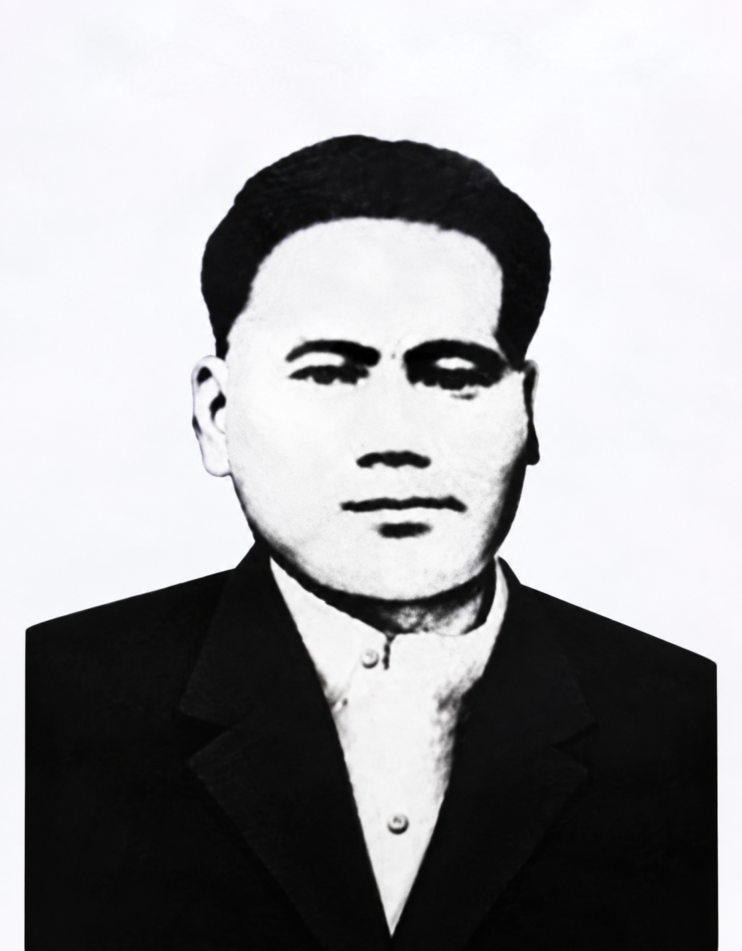
Dr Gautam Sarma
Phone:9435104661